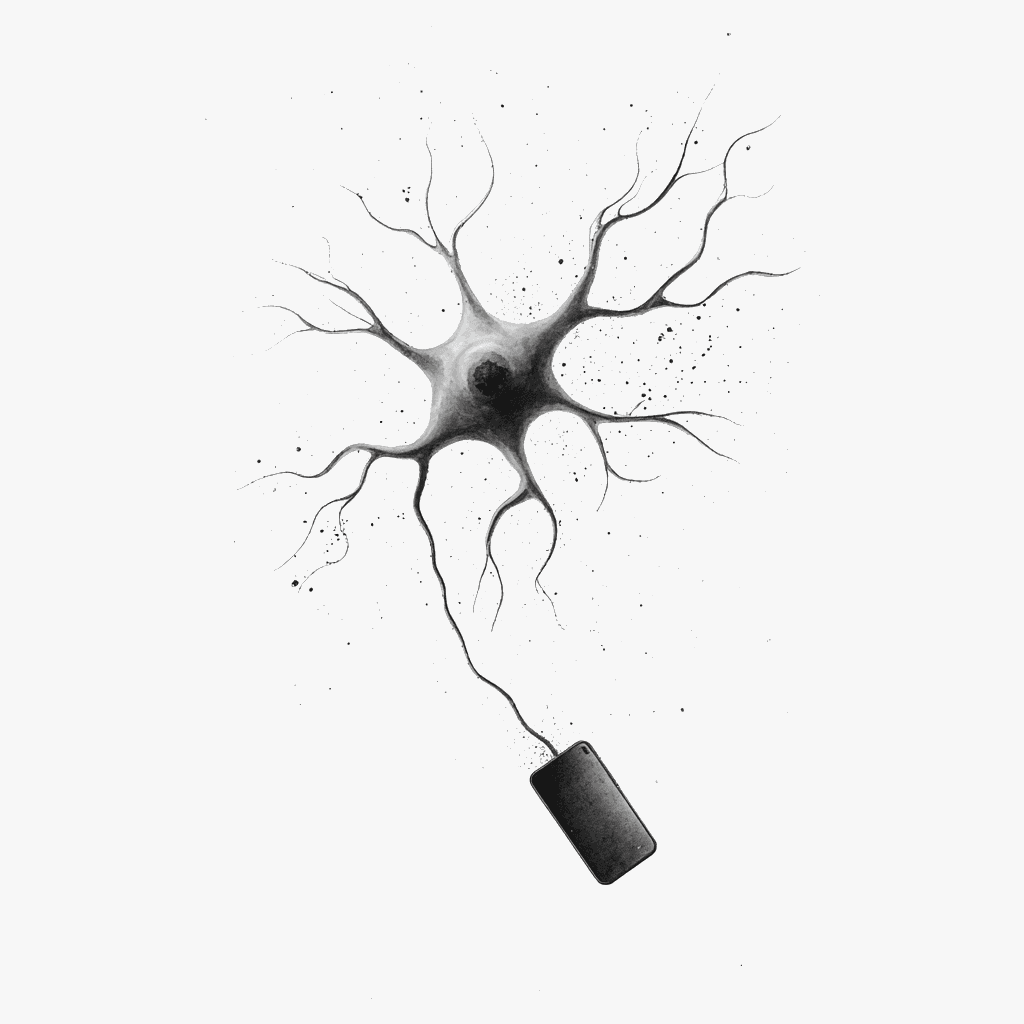
For decades, affirmations were dismissed as "woo-woo" wishful thinking.
Positive psychology fluff with no real substance. Something desperate people tried when they ran out of practical solutions.
Then neuroscience caught up.
We now understand that affirmations don't just make you feel better temporarily—they physically rewire your brain. The mechanism is real, measurable, and incredibly powerful.
And when you understand how it works, you'll never look at your daily practice the same way.
The Discovery That Changed Everything
In his groundbreaking book The Talent Code, journalist Daniel Coyle investigated "talent hotbeds" around the world—places that produced an unusual number of world-class performers in specific fields.
Why did a tiny music school in the Adirondacks produce more top classical musicians per capita than anywhere else? How did a tennis club in Moscow create more top 20 women players than the entire United States?
The answer wasn't genetics. It wasn't resources. It wasn't even exceptional coaching (though that helped).
It was myelin.
What Is Myelin (And Why Should You Care)?
Myelin is a fatty substance that wraps around the nerve fibers in your brain, similar to how rubber insulation wraps around a copper wire.
Every skill you have—from walking to speaking to playing piano—is created by chains of nerve fibers carrying electrical impulses through circuits in your brain. When you perform an action, signals fire through these circuits.
Here's where it gets interesting: When you fire a circuit repeatedly, your brain responds by wrapping layers of myelin around that neural pathway. Each new layer makes the signal stronger, faster, and more reliable. The thicker the myelin gets, the more automatic and effortless the skill becomes.
This is why Tiger Woods can execute a perfect golf swing without thinking. Why concert pianists' fingers fly across keys at impossible speeds. Why you can tie your shoes while having a conversation.
It's not magic. It's myelin.
The neural pathway has been fired so many times that it's wrapped in thick insulation, making the skill essentially hardwired into your nervous system.
But Here's What Nobody Tells You About Myelin
Myelin doesn't discriminate between "good" circuits and "bad" ones. It wraps around whatever you practice—including your self-limiting beliefs.
Every time you think "I'm not good at public speaking," you fire and strengthen that neural circuit.
Every time you catch yourself thinking "I always mess things up," you're building myelin around that pattern.
Every time you react with anxiety in social situations, you're making that anxious response more automatic.
Your brain is constantly myelinating—constantly making your most-repeated thoughts and behaviors more efficient and automatic.
The question isn't whether your brain is being wired. It's what it's being wired to do.
The Self-Image: Your Brain's Operating System
In Release Your Brakes!, James W. Newman identified something psychologists had been observing for decades: your self-image acts as a kind of control center for all your automatic behaviors, decisions, and reactions.
Your self-image is your brain's answer to the question "Who am I?"
And here's the critical insight: You don't act according to who you actually are. You act according to who you believe yourself to be.
If your self-image includes the belief "I'm not a morning person," you will resist early wake-ups—even if you've never actually tested whether you could become one.
If your self-image says "I'm bad with money," you'll make financial decisions that confirm that belief—unconsciously sabotaging opportunities to improve.
If your self-image whispers "I'm not the kind of person who succeeds," you'll find ways to prove it right—no matter how much potential you actually have.
Newman called these limiting beliefs "brakes" on your potential. But in the language of neuroscience, we can be more specific:
They're myelinated neural pathways that have become so efficient, so automatic, that you don't even question them anymore.
How Affirmations Hack Your Brain's Wiring System
Now here's where affirmations become devastatingly powerful—when you understand them through the lens of myelin.
Every affirmation you repeat is literally a practice session for a new neural circuit.
When you say "I am confident in social situations," even if you don't fully believe it yet, you're firing a new circuit. A circuit that connects the concept of "I am" with "confident" and "social situations."
The first time you say it, there's almost no myelin on that pathway. The connection is weak. Your brain might even reject it: "No you're not. Remember that awkward thing you said at the party last week?"
But you say it again the next day. Fire. More myelin wraps.
And again. Fire. More myelin.
And again. Fire. More myelin.
With each repetition, you're thickening the insulation around that circuit, making it faster, stronger, more automatic. Simultaneously, the old circuit—"I'm awkward in social situations"—gets less use, less myelin, less automatic.
Over time, the new pathway becomes the dominant one.
The Daily Practice Requirement
Here's the biological reality: Myelin requires repetition. Lots of it. Like building muscle, you need consistent stimulus for growth.
This is why reading affirmations once a month doesn't work. Why scribbling them in a journal occasionally produces no results. Why saying them inconsistently feels pointless.
You're not building enough myelin to make the new circuit stronger than the old one.
But when you review your affirmations daily—same time, same structure, consistent practice—you're giving your brain the repeated stimulus it needs to wrap those new circuits in thick, speed-enhancing insulation.
Think of each daily session as a training session. Not for your muscles, but for your brain's wiring.
Why Visualization Amplifies the Effect
Newman emphasized that effective affirmations must be vivid and experiential, not just recited words.
Neuroscience explains why.
When you practice a physical skill, you build myelin around the circuits involved in that movement. But here's the fascinating part: When you vividly imagine performing that skill, you activate the same circuits—and build myelin there too.
This is why Olympic athletes use visualization. Why surgeons mentally rehearse procedures. Why musicians imagine playing pieces away from their instruments.
Mental practice builds real myelin.
So when you read your affirmation "I speak confidently to large groups," and you take 15 seconds to actually imagine yourself doing that—see yourself on stage, feel the calm in your body, hear your voice projecting clearly—you're not just thinking about it.
You're firing the circuits. Building the myelin. Creating the neural infrastructure for that behavior to become automatic.
The Science of "Fake It Till You Make It"
This phrase always sounded dishonest to me. Like you're being phony.
But neurologically, it's precisely accurate.
You can't wait until you feel confident to start acting confidently. Because the feeling of confidence is a result of having a myelinated "confidence" circuit in your brain.
You build that circuit by acting as if you're already confident—repeatedly—until the circuit becomes so strong that confidence becomes your automatic response.
In other words: You must fake it (repeatedly practice the new behavior through affirmations and imagination) until you make it (build enough myelin that it becomes automatic).
It's not dishonesty. It's how brains work.
Why Most People Give Up Too Soon
When you first start practicing something new, you make mistakes. The circuit isn't established yet. The myelin is thin. Performance is clumsy and effortful.
This is the phase where most people quit affirmations.
"I'm saying these things, but I don't believe them. It feels fake. Nothing's changing."
What they don't realize is that they're in the critical early phase of myelination. The circuit is being built, but it's not strong enough yet to compete with the old, heavily-myelinated patterns.
It takes approximately 30 days of consistent practice for new neural pathways to gain enough strength to start influencing your automatic behavior.
After 60 days, the new circuits become competitive with the old ones.
After 90 days, the new patterns often become dominant.
But you have to practice daily. You have to fire those circuits consistently. You have to give your brain the repeated stimulus it needs to wrap those pathways in myelin.
The Role of Emotion in Accelerating Myelination
Deep practice—the kind that builds myelin fastest—requires operating at the edge of your ability, making mistakes, and correcting them. But there's another accelerant: emotion.
When you experience strong emotion while firing a circuit, your brain marks that circuit as important and prioritizes myelinating it.
This is why traumatic experiences create such strong neural pathways. Why you remember exactly where you were during major life events. Why emotional learning sticks better than dry information.
It's also why Newman insisted that effective affirmations must include the positive emotions you want to cultivate—excitement, pride, joy, confidence.
"I exercise regularly and I love how energized and strong I feel" builds myelin faster than "I exercise regularly."
The emotional component tells your brain: "This circuit matters. Wrap it up fast."
The Daily 5-Minute Investment
Now you understand why our app structures daily sessions the way it does.
Consistency: Daily practice provides the repeated stimulus needed for myelin growth.
Focus: One affirmation at a time, distraction-free, ensures you're actually firing the circuit instead of just reading words.
Timer: 15 seconds per affirmation gives you enough time to read slowly, visualize vividly, and feel the emotion—all of which maximize myelination.
Auto-shuffle: Prevents your brain from memorizing the sequence and going on autopilot, ensuring you actively process each affirmation.
Streak tracking: Provides motivation to maintain the daily consistency required for thick myelin growth.
It's not arbitrary. Every feature is designed around how your brain actually learns and changes.
What This Means for Your Potential
Here's the liberating truth:
Your current limitations aren't permanent. They're just well-myelinated neural pathways that your brain automatically follows.
Those pathways were built through repeated experience—often experiences from childhood that no longer apply to your adult life.
"I'm not good at math" might have come from one bad teacher in third grade, but you've been reinforcing that circuit for decades.
"I'm not athletic" might stem from being picked last in gym class, but the belief has been firing and myelinating ever since.
"I'm not worthy of success" might have roots in family dynamics you don't even remember, but the circuit is thick with decades of accumulated myelin.
The beautiful part? You can build new circuits.
You can practice new beliefs, new behaviors, new responses—and with enough repetition, those new circuits can become thicker, faster, more automatic than the old ones.
Your brain doesn't care which circuits are "true." It just myelinates the ones you use most.
So use the ones you want to strengthen.
The Bottom Line
Affirmations aren't positive thinking. They're not wishful manifestation.
They're targeted practice for specific neural circuits.
When done correctly—personal, positive, present tense, with emotional resonance, repeated daily—they systematically build myelin around the beliefs and behaviors you want to make automatic.
Over time, these new circuits become your new automatic responses. Your new self-image. Your new operating system.
This is how you release the brakes. Not through willpower or trying harder, but through the patient, consistent practice of firing new circuits until they become myelinated enough to override the old ones.
Your brain is changing every day regardless. The only question is whether you're directing that change or letting it happen by default.
Start your 7-day free trial and begin building the neural pathways for the person you're capable of becoming.